
Job positions for Electronic Engineers in Greece – Indicative recent company calls
- from the leading lighting company “Ilektron ABEE”
- from the leading telecommunications company “Datakat SA”
The Department of Electronic Engineering in relation to the state-of-the-art developments in science
An Electronic Engineer is defined, according to the professional rights of article 11 of PD 99/2018, as the engineer who deals with solving problems related to Information and Communication Technologies (ICT) and the technological applications of Electronics. The electronic engineer deals with the study, implementation and construction of systems for the production, transfer, distribution, storage, processing, control and use of data and information that are critical to the protection of the life, health and property of citizens, such as, indicatively and not restrictively, electronic systems of installations and applications of all kinds, information and communication systems of all kinds, hardware systems and software systems, internet systems, telecommunications and network systems and installations, and the provision of service level agreement services related to information and communication technology. In particular, they deal with aspects of the above related to research, analysis, design, study, construction, implementation-development, operation-maintenance, management and their economics. The subject area of the Electronic Engineer includes the following:
- Analog and digital hardware systems, circuits and devices, integrated circuits (programmable and non-programmable), computer systems architecture, low-current electronic installations, microelectronics and nanotechnology, sensors, embedded systems, industrial automation, intelligent systems, automatic control, robotics, with the state of the art in collaborative robotics, quantum computers and edge computing.
- Signal processing and automatic control systems: automatic and optimal control, signal processing, automation and robotics systems applications, biomedical applications and medical informatics, neural networks, fuzzy logic, quality control, with the state of the art ranging in deep learning and computational grids.
- Telecommunications, fixed and mobile communications networks and computer networks: telecommunications, computer networks, systems, technologies and their applications, satellite and mobile communications, electromagnetic fields, electromagnetic compatibility, antennas, radio waves, radio frequencies, radio and television systems, microwaves, microwave devices and circuits, remote sensing, with the state of the art in 6G networks and data streaming.
- Software and information systems: information systems of all kinds, programming, operating systems, application and system software, software engineering, data and knowledge storage and management systems, bioinformatics, geographic information systems, intelligent systems and their applications, parallel and distributed processing, embedded systems, computing systems, hardware, software, data and knowledge science and analytics, high-performance computing systems, human-machine interaction, visualization and graphics, management of information and communication systems, management and decision systems, e-governance, with the state of the art in heterogeneous parallel programming and remote ultra-complex interactive applications.
- Internet and world wide web technologies and applications: internet and world wide web technologies and applications, agreed service level network services, cloud computing systems and services, mobile computing systems, internet of things, processing, analysis and visualization of large volumes of data, which is also the state of the art.
- Security and privacy of data and systems: information security, security of information and communication systems, networks, data and knowledge, protection of privacy and intellectual property rights, with the state of the art in the recognition of dangerous behaviors and in cybersecurity.
- Computational theory and scientific computing: algorithms and theory of computation, data structures, graph management and processing, scientific computing, numerical analysis, optimization, with the state of the art in the optimal co-utilization of software and hardware for the optimal implementation of scientific computing.
The 5-year Study Program of the Department was (i) designed only in 2019, based exactly on the latest professional rights, (ii) strongly taking into account the current technological state in all its courses, and (iii) including a total of fifty-five (55) compulsory-elective and free-elective courses in the state of the art of four (4) distinct streams of the electronic engineer.
The Faculty Members of the EE Department cover the above scientific fields both at the level of education and at the level of research, as is demonstrated by their participation in national and international research programs, by their published work in high-impact scientific journals, and by their participation in international conferences and events.
Professional prospects – Employment of graduates
HMU assigned the company Career in Progress Ltd the preparation of a study “Potential Future Absorption of Graduates of the Departments of the Hellenic Mediterranean University – SWOT Analysis“, according to which the new trends indicate that the current technological change (4th Industrial Revolution) will exert a great influence on engineers. Machine learning, convolutional neural networks and other fields of Artificial Intelligence (AI) are already widely used in many areas of the science and technology of the Electronic Engineer:
Telecommunications
Regarding telecommunications, Greece, as a member of the Council of the International Telecommunication Union (ITU), actively promotes the Sustainable Development Goals of the United Nations 2030 Agenda. In order to achieve these goals, Telecommunications and Information and Communication Technologies (ICTs) will play a key role in the transformation of Greek cities by reducing the digital divide, which is particularly observed in rural areas, with the aim of developing broadband (Maglaras, 2018).
Europe is developing the European fifth-generation networks (5G networks), which are supported by a single pan-European spectrum policy. The networks being built and upgraded today must carry more than 6 times greater data traffic than the already existing ones (Zarkalis, 2018).
During the period 2020 – 2030, there is expected to be greater demand for access to content by ubiquitous users at unprecedented data rates. In order for this to happen, the network infrastructure must allow a multi-level set of applications, which will present very different characteristics from each other and must meet increased quality of experience requirements.
Furthermore, satellite technology can offer added value not only where terrestrial connectivity is not available at all, but also as a means of efficiently offloading user content without reducing the quality of experience. Also, satellite technology will play an important role in supporting the market for device-to-device (M2M) and IoT technologies (Vougioukas, 2018).
Technological innovation in the field of the overall miniaturization of the satellite payload paved the way for defining new operational concepts, alongside those taken into account by the classic LEO (low earth orbit satellites), MEO (medium earth orbit satellites) and GEO (geosynchronous satellites) systems, based on nano-satellites, pico-satellites, as well as cubesat satellites. Their application is expected to become very important in the 2020+ horizon, especially for supporting internet services and in various industry sectors (Vougioukas, 2018).
The development of nano-satellite systems is particularly attractive due to the limited cost and the required number of components, although the relationship between investment and performance is not very attractive, in terms of commercialization, since today’s nano-satellites are designed for experimental-scientific purposes. However, the period 2020 – 2025 is expected to be more efficient for their exploitation (Vougioukas, 2018).
The projects for the construction of NGA (next generation access networks) infrastructure through the European Regional Development Fund (ERDF) will create jobs in a wide range of specialties, which will have strong sustainability elements, given that they will concern a modern and constantly evolving sector that will horizontally support all sectors of the economy (e.g. technical companies, network maintenance companies, hardware and network manufacturers, content application development companies, telecommunications service providers, etc.). The above projects also create needs for the adaptation of workers, in order to cope with the technological transition, not only by workers in the telecommunications sector, but also by the rest involved in the implementation of the interventions (communications network installation companies, technical companies, etc.) (Maglaras, 2018).
Informatics
The ambient experience will play an important role, as technology will now simply be part of the environment. Devices continue to shrink in size and make people’s interactions with them increasingly natural (speech, gesture and thought), more reactive (answering questions) and more proactive (making unforeseen suggestions), with the ultimate goal of becoming essentially inseparable from the human entity. Neuro-feedback technology, which enables many video games to analyze brain waves (Moynihan & Kaufmann, 2018), could serve as a foundation for direct brain and nerve interaction, enabling the triggering of a series of technological processes that could be integrated into the smart system of everyone’s home, car, or office (Deloitte, 2020a).
Exponential intelligence will build on today’s cognitive capabilities, acquiring the ability, to some extent, to recognize and respond to the nuances of human interaction and emotion. With semantic and symbolic understanding, machines will be able to focus on real causality and not simply on false correlation. With a combination of technologies from human experience platforms, virtual assistants will be able to recognize and adapt to human moods (Deloitte, 2020a).
Quantum computers will be able to solve problems that are too large and complex for current supercomputers – from data science to materials science – using the special properties of quantum bits, or qubits, which will have the ability to create exponential change. Data scientists will be able to scan ever larger volumes of data for correlations, materials scientists will be able to use qubits to simulate atoms in ways that are not practical on classical computers, while infinite possibilities will also be created in many other fields, including communications, supply chain, security, cryptography, energy, etc. (Deloitte, 2020a).
Automotive Industry
The need to connect vehicles with advanced electronic information and entertainment functions leads to new skills and knowledge to bridge the existing gap between the automotive industry and ICT. Furthermore, more and more programs are being carried out internationally to promote “clean” vehicles (Cedefop & Eurofound, 2018), (European Commission, 2017b).
The spread of LED lamp technology is being promoted by companies, such as BMW, Audi, Lexus, providing the ability to project signs or messages on the road surface, while within the first years of the decade the next step will be taken for communication between cars at the level of the operation of the lighting fixtures (Tritaris, 2020), (Tsakiridis, 2020).
New materials, such as carbon fiber or magnesium, will be used more and more frequently in cars (although for now their price is prohibitive for mass car production). The American company Alite created a new alloy, Super Magnesium, significantly improving its comparative advantages both in relation to aluminum (lighter and more rigid) or carbon fiber (up to 50% cheaper) (Tritaris, 2020), (Tsakiridis, 2020).
Sensors inside the tires will communicate with the car’s central control unit, providing much more information than air pressure. Furthermore, airless tires are expected, such as Michelin’s Uptis, which will adapt to the condition of each road surface and will save the planet by a large percentage from the 200 million tires that are retired each year. Another goal of the tire industry is the replacement of rubber with other more ecological materials (e.g. Continental is working on a material called Taraxagum, which will be made from over 1,200 plants) (Tritaris, 2020), (Tsakiridis, 2020).
The glass surfaces of cars will also become surfaces for projecting data and images, and for communicating with the outside world. These surfaces are expected to be touch sensitive, and each passenger will be able to select their own entertainment and their own communication channel (Tritaris, 2020), (Tsakiridis, 2020).
Health
Artificial intelligence (AI) in the health sector will lead to a more personalized approach to medicine. Companies, such as GE, Siemens, and Philips produce digital pathology and radiology hardware and software that are informed by AI (UAE, 2020).
Many AI applications are used in the diagnosis and monitoring of patients. There are mobile applications that use AI data analysis to improve imaging quality during the screening and diagnosis of cancerous tumors (e.g. MobileODT) (UAE, 2020).
The utilization of data science on multiple platforms will create new business models of start-up companies, such as Owkin, which use it to develop detailed and reliable predictive models of a wide range of diseases in order to achieve more targeted therapies, which will be a very important advantage for care providers (UAE, 2020).
Denmark will invest 6.7 billion dollars for the development of 16 hospitals by 2023. About 20% of the investments or 1.2 billion dollars will be invested in digital technologies and smart medical devices. Six of the 16 hospitals will be “smart”, with advanced IT infrastructure (e.g. IoT) and digital healthcare solutions, while ten existing hospitals will be strengthened with the integration of digital technologies and the upgrade of existing infrastructure. The six smart hospitals will have electronic central medical history registries, which will be connected to clinics through an automated process. The country’s Hospital Construction Association received 1.6 billion dollars from the government for the development of the smart New Odense University Hospital, which is expected to be completed by 2022. Denmark’s six “smart hospitals” provide the opportunity for health technology companies to offer digital care solutions (Deloitte & SEV, 2020).
AccuHealth in Chile produces sensors and tablets that guide the patient, using quick questionnaires, collecting biometric data (blood pressure, glucose levels, weight, etc.) and providing specialized solutions for different diseases (diabetes, hypertension, etc.), as well as clinically certified medical devices. Unlike traditional health management companies, AccuHealth performs remote real-time monitoring, as the artificial intelligence technology it has developed simultaneously performs the appropriate categorization of patients, in order to ensure that the company’s “health coaches” focus on the patients who require immediate intervention. Having been “trained” on the medical records of 2.4 million patients in the country, AccuHealth’s artificial intelligence is able to categorize patients based on their biometric measurements and their psychological and social profile, thus identifying patients who are at high risk (Deloitte & SEV, 2020).
The FEEL bracelet, an invention of a Greek startup, combines the Feel Emotion Sensor and Cognitive Behavioral Therapy (CBT) to quantify a person’s emotional state for the first time and deliver 24x7x365 emotional health support to those who need it (Deloitte & SEV, 2020).
Invasive (implantable) brain-computer interfaces (BCIs) and neuroprostheses, although still at the laboratory level and experimental stage, have begun to produce exciting results in patient studies. Patients with spinal cord injury or stroke have shown that they are able to control external devices (such as computers and televisions), even anthropomorphic robotic arms. The use, therefore, of virtual reality, robotics, the pharmacological and neurophysiological capabilities of nanotechnology, given the example of successful neuroprosthetics, such as retinal implants, although still in an infant stage, are awaited with great expectations by the scientific community (Athanasiou, 2018).
Environment/Energy
The growing importance of sustainability and clean energy has reached all sectors. Many industries have realized that investing in resource efficiency, energy efficiency, renewable energy sources, waste and water management, etc., actually saves them money, increasingly reducing their dependence on primary materials and imports (FUTURE Time Traveler, 2018). The new optoelectronic technologies, nano-materials, automation and informatics constitute, among others, an important element of the current 4th Industrial Revolution, as tackling pollution, energy challenges, smart waste management, agricultural production, etc., are based to a large extent on the subject area and services of the Electronic Engineer.
The new technologies for clean energy from renewable sources (RES), but also for clean energy from the fusion of hydrogen nuclei or its isotopes, will constitute the main component of the planet’s development in the coming decades. In any case, RES are offered as a solution to the problem of the expected depletion of fossil fuel reserves. Recently, new policies for the use of renewable energy sources are being adopted by the European Union, as well as by many other states. RES today constitute the basis of the economic development model of the green economy.
Within this environment, the subject area and knowledge of the Electronic Engineer constitute, among others, a cornerstone element. In addition, the large infrastructures of ITER (https://www.iter.org/), as well as of NIF (https://lasers.llnl.gov/news#ignition) in the USA, as well as the large laser infrastructures of Europe, including those of our country and our Department (https://ippl.hmu.gr/), which deal with the field of clean energy from fusion, are based for their development on the new electronic and optoelectronic technologies, on automation and on informatics, which the graduates of our Department cover harmoniously.
Potential Employment of Human Resources
According to the new trends, the professions of engineers present very positive prospects, as they are effectively complemented by digital technology. Indicatively, it is mentioned that approximately 1,610,470 jobs are projected for engineers by 2030 in the USA and 475,217 in the United Kingdom (Bakhshi, Downing, Osborne & Schneider, 2017).
The increased demand for “clean” vehicles will create new jobs for staff and executives in departments, such as Research and Development (R&D), Design and Industrial Production. Furthermore, there will be demand for Materials Scientists, Computer Analysts, Electronic-Electrical-Mechanical-Chemical Engineers, but also Industrial and Materials Engineers. Furthermore, the need for “smart” vehicles with advanced electronic information and entertainment capabilities will require new skills and new technologies (European Commission, 2017) in (Cedefop & Eurofound, 2018). According to the European Commission, the demand for workers with specialized digital skills is already increasing by approximately 4% each year (Berger and Frey, 2015) in (OECD, 2019).
Based on these developments, approximately the following are estimated:
- 131,000 jobs for scientists and engineers,
- 920,000 jobs for professionals in the information and communication technology sector,
- 129,000 jobs for intermediate-level professionals in the physical and technical sciences, and
- 000 jobs for technicians in the information and communication sector,
for 2030 (European Commission, 2017) in (Cedefop & Eurofound, 2018).
According to the research of the McKinsey Global Institute (2020), the following are estimated:
- 2,602,000 jobs for scientists and engineers,
- 681,000 jobs for intermediate-level professionals in the physical and technical sciences,
- 1,311,000 jobs for professionals in the information and communication technology sector,
- 364,000 jobs for electrical and electronic engineers, and
- 4,022,000 jobs for new professions that will be created, which are related to technological developments (e.g. specialists in AI ethics).
In light of the talent shortage, employers in the solar, wind and hydroelectric energy sector may want to draw candidates from the oil industry, as workers there seek new roles.
24 million new jobs will be created globally by 2030, if the right policies are implemented to promote a more ecological economy, according to a new report by the ILO (ILO, 2018b).
This includes 2.1 million jobs in wind energy production, 6.3 million jobs in solar and photovoltaic energy production, and 12 million jobs in agriculture and industry related to biofuels, according to the estimates of (OECD, 2011).
In the USA, employment in the clean energy sector could increase by 4 million jobs by 2030, if a first 30% of the renewable energy portfolio is implemented together with aggressive energy efficiency measures.
In addition, the growing importance of sustainability has reached all sectors. Many industries have realized that investing in resource efficiency, energy efficiency, renewable energy sources, waste and water management, etc., actually saves them money, increasingly reducing their dependence on primary materials and imports (FUTURE Time Traveller, 2018).
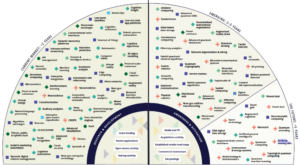
Figure. Skills and know-how of the future (Source: Deloitte, 2020).
Bibliography – Sources
- (Deloitte, 2020): Deloitte, “Tech Trends“, 2020. Retrieved from: https://www2.deloitte.com/us/en/insights/focus/tech- trends.html.
- (Deloitte & SEV, 2020): Deloitte & SEV, “Digital transformation of the health sector“, 2020. Retrieved from Deloitte: https://www2.deloitte.com/content/dam/Deloitte/gr/Documents/life-sciences-health- care/gr_health_4_0_noexp.pdf.
- (OECD, 2011): Organisation for Economic Co-operation and Development (OECD), “Towards green growth”, 2011. Retrieved from: https://www.oecd.org/greengrowth/48012345.pdf.
- (Tsakiridis, 2020): P. Tsakiridis, “Redefining the urban vehicle for smart cities“, Master Thesis, Thessaloniki, 2020. Retrieved from https://repository.ihu.edu.gr/xmlui/handle/11544/29501.
- (UAE, 2020): UAE – Ministry of Cabinet Affairs and the Future, “Future Possibilities Report“, Dubai, 2020.
- (Athanasiou, 2018): A. Athanasiou, “Study of the neural circuits of the brain in patients with spinal cord injury“, Doctoral dissertation, AUTH, Thessaloniki, 2018.
- (Vougioukas, 2018): D. Vougioukas, “5th generation satellite communications technologies” from the book “EETT – Development prospects of electronic communications in Greece”, pp. 31-38, Ed. I. Sideris, Athens, 2018.
- (Zarkalis, 2018): N. Zarkalis, “Digital transformation and investments in next generation infrastructure as pillars of development” from the book “EETT – Development prospects of electronic communications in Greece”, pp. 39-46, Ed. I. Sideris, Athens, 2018.
- (Maglaras, 2018): V. Maglaras, “Preface – Article by the Secretary General of EETT” from the book “EETT – Development Prospects of Electronic Communications in Greece”, pp. 13-22, Ed. I. Sideris, Athens, 2018.
- (Tritaris, 2020): P. Tritaris, “The 20 technologies that will dominate the 2020s decade“, Car and Drive, 2020. Retrieved: https://www.caranddriver.gr/eidiseis/arthro/oi_20_texnologies_pou_tha_kyriarxisoun_stin_dekaetia_tou_2020-7735532/.
- Cedefop & Eurofound. 2018. Skills forecast: trends and challenges to 2030. Luxembourg: Publications Office. Retrieved from http://data.europa.eu/doi/10.2801/4492
- European Commission. 2017. Blueprint for sectoral cooperation on skills: responding to skills mismatches at sectoral level. Luxembourg: Publications Office. Retrieved from https://ec.europa.eu/social/main.jsp?catId=738&langId=en&pubId=7969
- FUTURE Time Traveller. 2018. FUTURE Time Traveller – Policy Mapping Study. Deliverable of the Erasmus+ project: 590221-EPP-1-2017-1-BG-EPPKA3- PI-FORWARD. Retrieved from https://future-time-traveller.eu/
- SEV. 2018. Special Report on Human Resources in Health. Athens, Greece. Retrieved from http://www.sev.org.gr/Uploads/Documents/50968/SR_Dexiotites%20ygeias%20_as_comments%2 0_F.pdf
- Bakhshi, H., Downing, J., Osborne, M., and Schneider, P. 2017. The Future of Skills: Employment in 2030. London: Pearson and Nesta.
- 2019. Future of Education and Skills 2030 Concept Note. Retrieved from www.oecd.org/education/2030-project
- 2018b. World Employment and Social Outlook 2018: Greening with jobs. Retrieved from http://www.ilo.org/global/publications/books/WCMS_628654/lang–en/index.htm
Employment of the Graduates of the Department of Electronic Engineering – Results of the Graduate Survey of the pre-existing 4-year Undergraduate Program of the Department
The Department of Electronic Engineering of the Hellenic Mediterranean University (since 1981 in the field of public tertiary education, since 2001 in higher education and since 2019 in university education with a 5-year study program of the School of Engineering), provides modern, complete, theoretical and laboratory, general and specialized, but mainly applied knowledge in matters of electronics, telecommunications, automation and informatics.
The structure of the Department includes 3 Divisions:
+ the Division of Electronics & Applications,
+ the Division of Informatics & Automation, and
+ the Division of Telecommunications & Networks,
while the 5-year Undergraduate Program of the Department includes 4 cycles of compulsory-elective courses in:
A. Telecommunications, Networks and Defense Systems Technologies,
B. Information Management, Intelligent Systems and Automation,
C. Electronics, Optoelectronics, Photonics and Nanotechnology, and
D. Informatics and Applications.
The EE Department is active in research and development mainly within the framework of its 5 Research Laboratories (with a total of more than 35 laboratory spaces):
+ the Laboratory of Electronics, Laser & Plasma Technologies, Processing & Simulations (LATRONICS),
+ the Laboratory of Environmental Technologies & Applications (LETA),
+ the Laboratory of Design, Processing and Automation (DMA-LAB),
+ the Laboratory of Computer Technology, Informatics & Electronic Constructions (TYPIK), and
+ the Laboratory of Telecommunications & Electromagnetic Applications (TelEMA).
The Department of Electronic Engineering has a close relationship with two (2) Institutes of the University Research Center (URC) of HMU, the Institute of Plasma Physics & Laser (https://ippl.hmu.gr) and the Institute of Physics of the Earth’s Interior and Geohazards (https://earth-phys.hmu.gr), which also started from the EE Department.
As mentioned above, the EE Department has as its mission the provision of high-level education in the subject areas of the Electronic Engineer, as well as the promotion of science and technology through basic and applied research (https://ee.hmu.gr/).
According to the results of the graduate survey, the graduates of the pre-existing 4-year Undergraduate Program of the Department of Electronic Engineering are employed:
- at a rate of 75.6% in a subject related to their studies,
- at a rate of 6% work in the public sector,
- at a rate of 12.4% do other kinds of work, and
- at a rate of only 6% declare that they are conscripts, postgraduate/doctoral students or unemployed, being outside the labor market.
According to the results of the same graduate survey, of the graduates who practice the profession of Electronic Engineer:
- 39% are employed in the subject area of Telecommunications,
- 28% are employed in the subject area of Electronics,
- 21% are employed in the subject area of Automation, and
- 12% are employed in the subject area of Informatics,
while some of the most widespread individual employment subjects of the graduates of the Department of Electronic Engineering include:
- cutting-edge technologies,
- microwave devices,
- wired telecommunications,
- digital telecommunications,
- military applications,
- the development of electronic devices,
- measurement and control systems,
- internet applications,
- databases,
- commercial applications,
- biomedical systems,
- optoelectronic systems, and
- employment in secondary education.
Regarding the degree of satisfaction with their work:
- 44% of graduates declare that they are very/fully satisfied with their professional prospects,
- 39% declare that they are quite satisfied,
- 15% declare that they are partially satisfied and
- only 2% declare that they are not satisfied.
The Graduates continue their studies
As the graduates of the pre-existing 4-year Undergraduate Program of the Department are absorbed easily and directly by the labor market, only at a rate of 19% did they continue their studies and obtain a postgraduate degree, while a rate of 2.5% continued also for doctoral studies.
Attractiveness of the Department for postgraduate and doctoral studies
Nevertheless, the Department of Electronic Engineering proves to be particularly attractive to graduates of all Universities, numbering at the current point in time (31-12-2022):
- 3 doctoral graduates of the Department’s independent doctoral studies program,
- 30 doctoral candidates,
- 52 holders of the postgraduate diploma of the independent MSc “Electronic Systems of Telecommunications & Automation”,
- 56 active postgraduate students of the MSc “Electronic Systems of Telecommunications & Automation”,
- 20 holders of the postgraduate diploma of the independent MSc “Lasers, Plasma & Applications”,
- 26 active postgraduate students of the MSc “Lasers, Plasma & Applications”, and
- 20 holders of the postgraduate diploma of the independent MSc “Geoenvironmental Resources & Hazards”.